Social Media Use and Adolescent Mental Health: A Narrative Review
Nguồn và giấy phép
- Tên bài
- Social Media Use and Adolescent Mental Health: A Narrative Review
- Tác giả
- Jyoti Shankar Tripathy, Deepanjali Tripathy
- Tạp chí
- Journal of South Asian Issues (JSAI), 2026
- DOI
- 10.65826/jsai.1.2.2026.58
- Giấy phép
- CC BY 4.0
Đã chuyển định dạng từ bản gốc; nội dung không thay đổi.
Xem bản gốcRESEARCH ARTICLE Open Access
Social Media Use and Adolescent Mental Health: A Narrative Review
Jyoti Shankar Tripathy1*Deepanjali Tripathy2
*Corresponding Author Received: 31.08.2025 Accepted: 24.02.2026
Publication Date: 30.05.2026
© The Author(s) 2026 (CC BY 4.0)
ISSN: 3108-6144
Corresponding Author Mail: 9438154622jyoti@gmail.com
1* Research Scholar, Department of Psychology, Lovely Professional University, Phagwara, India
2 Research Scholar, Department of English, Student of Lovely Professional University, Phagwara, India
Abstract
Social media use has become ubiquitous among Adolescents worldwide and has given rise to several debate regarding its impact on mental health. This narrative review critically examines the published literature and its impact, which will elucidate the complex interplay between digital media platforms and adolescent psychological outcomes from empirical studies and metaanalysis, retrieved from Scopus, PubMed, and Google Scholar databases. Several research indicates that social media contributes to both positive and negative outcomes, with negative outcomes often related to cyberbullying, social comparison, and sleep disturbance, while positive effects stem from social support and identity exploration. Important gaps remain prevalent, notably in casual inference, including longitudinal studies, innovative methodologies, and with new age technologies. These findings indicate how we can carefully plan public health rules and social media usage to protect and support adolescents mental health.
Keywords: Adolescents, Mental health, social media, Depression, Anxiety
Cite this article: Tripathy, J. S., & Tripathy, D. (2026). Social Media Use and Adolescent Mental Health: A Narrative Review. Journal of South Asian Issues (JSAI), 1(2), 256–270. https://doi.org/10.65826/JSAI.1.2.2026.58
© 2026 The Author(s). This article is licensed under a Creative Commons Attribution 4.0 International License (CC BY 4.0). To view a copy of this license, visit https://creativecommons.org/licenses/by/4.0/
1. INTRODUCTION
Over the past decade, social media has become one of the most influential technological forces shaping adolescent development, communication, and self-perception. Unlike earlier forms of digital communication, today's platforms such as Instagram, TikTok, Facebook, Snapchat, and YouTube are not merely communication tools but highly interactive ecosystems that integrate entertainment, identity expression, social validation, and personalized content algorithms (Odgers & Jensen, 2020; Valkenburg & Peter, 2013). For many adolescents, social media is embedded into daily routines and identity formation, often functioning as a primary medium for friendship maintenance, emotional disclosure, information seeking, and cultural participation (Rideout et al., 2018; Livingstone et al., 2017). As a result, social media is not only an external digital environment but also a psychological space where adolescents negotiate belonging, visibility, and social meaning (George & Odgers, 2015; Nesi et al., 2020).
Parallel to this rapid growth, scholars, policymakers, mental health professionals, and parents have raised increasing concerns about the implications of prolonged and emotionally invested social media use. A growing body of evidence suggests associations between intensive engagement and mental health challenges, including anxiety, depression, sleep disturbance, loneliness, disordered eating, low selfesteem, and increased exposure to cyberbullying ( Keles et al., 2020; Woods & Scott, 2016; Sampasa-Kanyinga et al., 2018). However, emerging research complicates these interpretations by demonstrating potential positive outcomes such as increased social support, identity exploration, community belonging, and access to mental health resources, benefits particularly significant for marginalized or socially isolated youth (George & Odgers, 2015; Pretorius et al., 2019; Craig et al., 2021; Villatte et al., 2022). Thus, the relationship between social media and adolescent mental health appears neither linear nor universally harmful, but conditional, culturally variable, and shaped by psychological and contextual factors (Odgers & Jensen, 2020; Valkenburg et al., 2022; Marciano et al., 2022).
Despite extensive research, several conceptual and methodological gaps persist. First, existing studies show substantial inconsistency in findings due to differences in measurement tools, operational definitions of "use," and population samples (Orben & Przybylski, 2019). Many studies rely on selfreported screen time, which does not capture the quality, emotion, or motivation of engagement (Valkenburg et al., 2022; Rideout et al., 2018). Second, much of the research disproportionately focuses on Western cultural contexts, leaving limited understanding of how sociocultural norms, family systems, and digital infrastructures influence adolescents in other regions (Livingstone et al., 2017; Naslund et al., 2020; Smahel et al., 2020). Third, many studies employ cross-sectional methods, making it difficult to determine causality or the direction of influence, whether social media contributes to mental health challenges, or whether adolescents already experiencing distress gravitate toward online platforms (Coyne et al., 2019; Kelly et al., 2018). Finally, few reviews integrate psychological theory (such as Social Comparison Theory, Uses and Gratifications Theory, or the Differential Susceptibility Model) to explain why and for whom social media exerts risk or resilience effects (Festinger, 1954; Valkenburg & Peter, 2013; Przybylski et al., 2013).
Given these gaps, a comprehensive and critical synthesis of current evidence is necessary. This narrative review aims to integrate existing research to clarify how social media affects adolescent mental health by analysing both risks and protective factors across emotional, behavioural, and developmental domains. Rather than treating social media as uniformly harmful or beneficial, this review adopts a balanced perspective that acknowledges complexity and variation (Odgers & Jensen, 2020; Montag et al., 2021).
To guide this synthesis in a coherent and focused manner, the review is structured around key thematic questions that address patterns of use, associated outcomes, and the factors shaping these relationships.
These guiding questions help organize the discussion while maintaining the narrative flow of the review. What patterns and purposes characterize adolescent social media use globally? What negative mental health outcomes are associated with social media use, and what mechanisms contribute to these effects? What potential benefits or positive psychological outcomes does social media use offer adolescents? Which individual, psychological, and contextual factors moderate these outcomes? What theoretical perspectives and methodological limitations shape current understanding of this topic?
The primary aim of this narrative review is to critically synthesize existing evidence on adolescent social media use and mental health, with particular attention to patterns of risk, resilience, and contextual variability. Rather than offering a descriptive catalogue of findings, the review seeks to integrate empirical results with theoretical perspectives to clarify when, how, and for whom social media engagement becomes psychologically consequential. By doing so, the paper contributes to ongoing debates on adolescent well-being in digital environments and informs future research, intervention design, and policy development.
2. LITERATURE REVIEW
2.1 Patterns and Purposes of Social Media Use in Adolescence
Adolescents engage with social media for diverse psychological and developmental reasons, extending beyond entertainment or communication. Research shows that platforms such as Instagram, TikTok, and Snapchat function as environments through which adolescents construct identity, maintain peer relationships, and negotiate social belonging (Rideout et al., 2018; Montag et al., 2021; George & Odgers, 2015). These platforms allow space for self-expression, experimentation with identity, and visibility within peer networks. The use is often intentional and socially contingent rather than passive or incidental (Nesi et al., 2020; Craig et al., 2021).
Patterns of use also reflect developmental needs, including autonomy-seeking, peer validation, emotional regulation, and self-presentation (Orben & Przybylski, 2019). Valkenburg et al. (2022) emphasized that the interactive and algorithmic nature of these platforms personalizes content exposure, reinforcing emotional engagement and behavioural repetition. This heightened emotionalized interaction differentiates social media from earlier digital communication technologies (Montag et al., 2021; Naslund et al., 2020).
Cross-cultural studies further indicate that usage patterns differ based on family structure, cultural norms, and societal expectations. For instance, adolescents in collectivistic cultures frequently use platforms to reinforce relational ties rather than display individual identity (George & Odgers, 2015; Livingstone et al., 2017). The role of anonymity, visual platforms, and synchronous messaging also shapes how adolescents navigate social interactions online (Pater et al., 2016; Schønning et al., 2020).
Table 1: Studies Examining Patterns and Motivations for Adolescent Social Media Use
| Author(s) & Year | Sample Characteristics | Region/Country | Platform(s) Studied | Primary Motivation Identified | Methodological Type |
|---|---|---|---|---|---|
| Rideout et al., 2018 | Adolescents 12–18 | U.S.A | Multiple Platforms | Identity expression and routine socialization | Survey study |
| Valkenburg et al., 2022 | Mixed adolescent population | Europe | TikTok, Instagram | Personalized algorithmic engagement | Meta-analysis |
| George & Odgers, 2015 | Adolescents, mixed gender | Global | General social media exposure | Relational belonging and support | Systematic review |
2.2 Negative Psychological Outcomes
A substantial body of research documents associations between intensive social media use and negative mental health indicators among adolescents. Depression and anxiety frequently emerge as psychological outcomes, and scholars argue that mechanisms such as social comparison, cyberbullying exposure, and emotionally loaded content may intensify distress (Twenge et al., 2018; Arad et al., 2017; Vannucci & McCauley Ohannessian, 2019). These effects are most pronounced where usage involves passive browsing, appearance-focused platforms, or emotionally motivated posting rather than informational engagement (Fardouly et al., 2015; Tiggemann & Slater, 2013).
Cyberbullying constitutes another major risk. Keles et al. (2020) highlighted that online harassment is strongly correlated with lowered self-esteem, persistent anxiety, and prolonged depressive symptoms among adolescents (Hinduja & Patchin, 2013; Bottino et al., 2015). Unlike traditional bullying, digital harassment can be persistent, anonymous, and unbounded by physical space or time (Pater et al., 2016; Gámez-Guadix et al., 2016).
Sleep disturbance is also repeatedly associated with late-night digital engagement (Draženović et al., 2023). Night-time screen exposure disrupts circadian regulation, and adolescents frequently maintain asynchronous communication behaviours driven by fear of missing out (FOMO), which interferes with sleep hygiene and emotional regulation (Przybylski et al., 2013; Woods & Scott, 2016; Scott et al., 2019; Silvani et al., 2022).
Table 2: Studies Linking Social Media Use with Negative Psychological Outcomes
| Author(s) & Year | Mental Health Outcome | Mechanism Identified | Severity/Trend Reported | Methodological Type |
|---|---|---|---|---|
| Twenge et al., 2018 | Depression and anxiety | Passive use and appearance comparison | Increased symptoms associated with duration of use | Cross-sectional |
| Keles et al., 2020 | Anxiety and lowered self-esteem | Cyberbullying and peer aggression | Consistent association across platforms | Systematic review |
| Pretorius et al., 2019 | Sleep disturbance | Nighttime usage and emotional reinforcement | Disrupted circadian rhythm and persistent fatigue | Longitudinal |
2.3 Positive Psychological Outcomes
Social media does not uniformly function as a psychological risk. Evidence demonstrates that platforms also provide meaningful emotional benefits and supportive functions, particularly for adolescents who experience marginalization, disability, or geographic isolation. Online communities may enable access to be belonging, identity validation, and supportive peer networks (George & Odgers, 2015; Craig et al., 2021; Villatte et al., 2022). Pretorius et al. (2019) noted that online mental health resources provide psychoeducational materials, coping tools, and peer-support environments that may reduce perceived stigma related to help-seeking (Bradley et al., 2012; Kauer et al., 2014).
For some adolescents, particularly LGBTQ+ youth or neurodiverse populations, online anonymity and digital communities allow for identity exploration that might not be accessible in offline contexts (Craig et al., 2021; Montag et al., 2021). Engagement in supportive groups may foster resilience when online interactions align with emotional needs rather than comparison-driven validation (Pretorius et al., 2019; Naslund et al., 2020).
| Table 3: Studies Ide | entifying Positive I | Psychological | Outcomes of S | Social Media Use | |
|---|---|---|---|---|---|
| _ |
| Author(s) & Year | Positive Outcome | Platform Type | Mechanism of Benefit | Methodological Type | |
|---|---|---|---|---|---|
| George & | Increased social | Instagram, | Peer belonging and safe | Systematic | |
| Odgers, 2015 | support | emotional sharing | review | ||
| Pretorius et | Access to mental | YouTube, Online | Psychoeducation and | Longitudinal | |
| al., 2019 | health support | communities | shared lived experience | Longitudinai | |
| Rideout et al., 2018 | Identity exploration and creativity | TikTok, Instagram | Interactive content creation | Survey |
2.4 Moderators and Mediators
The impact of social media on adolescent mental health is not universal but varies depending on individual differences, usage patterns, and contextual factors. Several moderators, including age, gender, emotional regulation capacity, parental mediation, and pre-existing psychological vulnerability, shape how adolescents respond to digital content (Vannucci & McCauley Ohannessian, 2019; Nesi et al., 2020). For instance, girls tend to demonstrate stronger vulnerability to appearance-based comparison and body dissatisfaction, especially on highly visual platforms such as Instagram (Fardouly et al., 2015; Tiggemann & Slater, 2013). Boys, in contrast, may be more sensitive to online aggression and competitive status-oriented interactions (Gámez-Guadix et al., 2016). Parental involvement serves as a significant environmental moderator. Kelly et al. (2018) found that active and constructive parental mediation reduces the risk of problematic engagement, whereas excessive monitoring can evoke secrecy and push adolescents toward concealed or alternative accounts (Smahel et al., 2020; Livingstone et al., 2017).
Fear of missing out (FOMO), social validation-seeking, and emotional dependency have been identified as key psychological mediators that influence the relationship between usage intensity and emotional well-being. Przybylski et al. (2013) demonstrated that FOMO amplifies tendencies toward compulsive checking, disrupted sleep cycles, and heightened anxiety. Similarly, upward comparison processes mediated by curated online personas strengthen feelings of inadequacy and internalized pressure for social approval (Festinger, 1954; Arad et al., 2017).
Table 4: Moderating and Mediating Psychological Mechanisms
| Author(s) & Year | Role (Moderator/Mediator) | Variable | Influence Pattern | Methodological Type |
|---|---|---|---|---|
| Vannucci & Ohannessian, 2019 | Moderator | Gender differences | Higher vulnerability among girls to appearance comparison | Longitudinal |
| Kelly et al., 2018 | Moderator | Parental mediation | Constructive mediation reduces negative effects | Cohort study |
| Przybylski et al., 2013 | Mediator | Fear of missing out (FOMO) | Predicts compulsive use and emotional dependency | Experimental survey |
2.5 Behavioural Implications and Risk Exposure
Social media also presents behavioural risks associated with digital disinhibition, exposure to harmful content, and unsafe networking practices. Adolescents are more likely than adults to share personal information, engage in risky communication, and respond impulsively to peer pressure cues in digital environments (Gámez-Guadix et al., 2016; Pater et al., 2016). Extended screen exposure is additionally linked to sleep disruption, reduced physical activity, and altered emotion-regulation cycles (Scott et al., 2019; Woods & Scott, 2016).
Cyberbullying remains a significant concern, especially due to its persistent, boundaryless, and often anonymous nature. (Hinduja & Patchin, 2013) emphasized that online harassment patterns can mirror or escalate offline bullying dynamics, particularly within school social hierarchies (Bottino et al., 2015).
| Author(s) & Year | Behavioural Risk Type | Mechanism | Severity/Outcome | Methodological Type |
|---|---|---|---|---|
| Gámez- Guadix et al., 2016 | Unsafe online interactions | Meeting strangers online, impulsivity | Increased vulnerability to grooming and exploitation | Longitudinal |
| Scott et al., 2019 | Sleep disturbance | Late-night screen use | Reduced sleep quality and increased fatigue | Cohort study |
| Hinduja & Patchin, 2013 | Cyberbullying involvement | Peer aggression online | Anxiety, emotional dysregulation, academic disengagement | Survey |
Table 5: Behavioural Risks Associated with Social Media Use
Recent literature suggests that social media does not operate as inherently beneficial or harmful. Instead, its psychological impact depends on how, when, and why adolescents engage with it (Odgers & Jensen, 2020; Valkenburg et al., 2022). Meta-analytic findings highlight non-linear patterns, where moderate engagement often aligns with neutral or adaptive outcomes, while extreme underuse or overuse may signal social isolation or emotional dysregulation (Orben & Przybylski, 2019; Boer et al., 2021).
Hybrid interpretations emphasize social media's duality, operating as a space of both connection and comparison, empowerment and exposure, support and surveillance (Montag et al., 2021; Marciano et al., 2022). This complexity underscores ongoing debates regarding policy, educational interventions, and responsible digital literacy frameworks rather than complete avoidance (Livingstone et al., 2017; Richards et al., 2015).
Overall, findings highlight a nuanced relationship between social media use and adolescent mental health. Evidence shows:
- i. Potential benefits related to belonging, identity exploration, mental health resource access, and community support (George & Odgers, 2015; Pretorius et al., 2019; Craig et al., 2021).
- ii. Risks tied to comparison mechanisms, sleep disruption, cyberbullying, compulsive usage, and emotional dependency (Twenge et al., 2018; Keles et al., 2020; Woods & Scott, 2016).
- iii. Moderating and mediating factors such as gender, emotional needs, parental influence, and usage intentions shape psychological outcomes (Vannucci & McCauley Ohannessian, 2019; Kelly et al., 2018; Przybylski et al., 2013).
- iv. Mixed evidence supports a contextual and developmentally informed understanding rather than reductionist assumptions (Orben & Przybylski, 2019).
This body of evidence informs the conceptual grounding for the present study, emphasizing the need for approaches that integrate both risk and resilience frameworks when examining adolescent digital engagement (Naslund et al., 2020; Schønning et al., 2020).
Despite rapid growth in this field, several gaps persist. Most notably, the literature remains dominated by cross-sectional designs, limiting causal inference and obscuring developmental trajectories. Cultural diversity is underrepresented, with a disproportionate focus on Western contexts. Furthermore, theoretical frameworks are often mentioned but rarely integrated systematically, resulting in fragmented explanations of risk and resilience. While models such as Social Comparison Theory and the Differential Susceptibility to Media Effects Model offer valuable explanatory potential, their application across empirical studies remains inconsistent. (Festinger, 1954).
3. CONTENT ANALYSIS METHOD
A comprehensive literature search was conducted to identify peer-reviewed articles and credible sources examining the effects of social media on adolescent mental health. Databases searched included PubMed, PsycINFO, Scopus, Web of Science, and relevant institutional reports (Smahel et al., 2020; Livingstone et al., 2017). Additionally, grey literature and other sources such as governmental and organizational reports were considered to ensure a broad capture of evidence (Anderson et al., 2023; Rideout et al., 2018).
Search terms combined keywords related to social media (e.g., Instagram, TikTok, Facebook, Snapchat, digital platforms) with adolescent mental health outcomes (e.g., anxiety, depression, wellbeing, sleep disturbance, cyberbullying) using Boolean operators to refine results. Searches were limited to publications in English from 2010 onwards, reflecting the rapid evolution of digital platforms (Odgers & Jensen, 2020; Valkenburg et al., 2022).
This structured literature search approach was selected to ensure a comprehensive, transparent, and methodologically rigorous synthesis of existing evidence on how social media relates to adolescent mental health. Searching multiple academic databases alongside institutional and grey literature reduces publication bias and captures both empirical studies and policy-relevant reports that may not appear in traditional journals. The use of carefully constructed keyword combinations with Boolean operators allows precise retrieval of studies directly addressing specific platforms and mental health outcomes, while the time restriction to publications from 2010 onward reflects the rapidly evolving nature of social media environments and their unique influence on today's adolescents. Limiting sources to peerreviewed and credible reports enhances the reliability and validity of the evidence base. Overall, this method is highly relevant to the study because it enables a broad yet focused examination of multidisciplinary research, ensuring that conclusions are grounded in up-to-date, diverse, and highquality evidence.
3.1 Inclusion and Exclusion Criteria
Studies were included if they:
- i. Focused on adolescents aged 10–19 years.
- ii. Examined psychological or mental health outcomes associated with social media use.
- iii. Reported empirical findings, including longitudinal, cross-sectional, or systematic reviews/meta-analyses.
- iv. Were published in peer-reviewed journals or credible institutional sources.
3.2 Exclusion criteria
- i. Studies focusing on adults only.
- ii. Non-empirical reports without data (e.g., opinion pieces, editorials).
- iii. Articles not available in English.
- iv. Studies with insufficient methodological details.
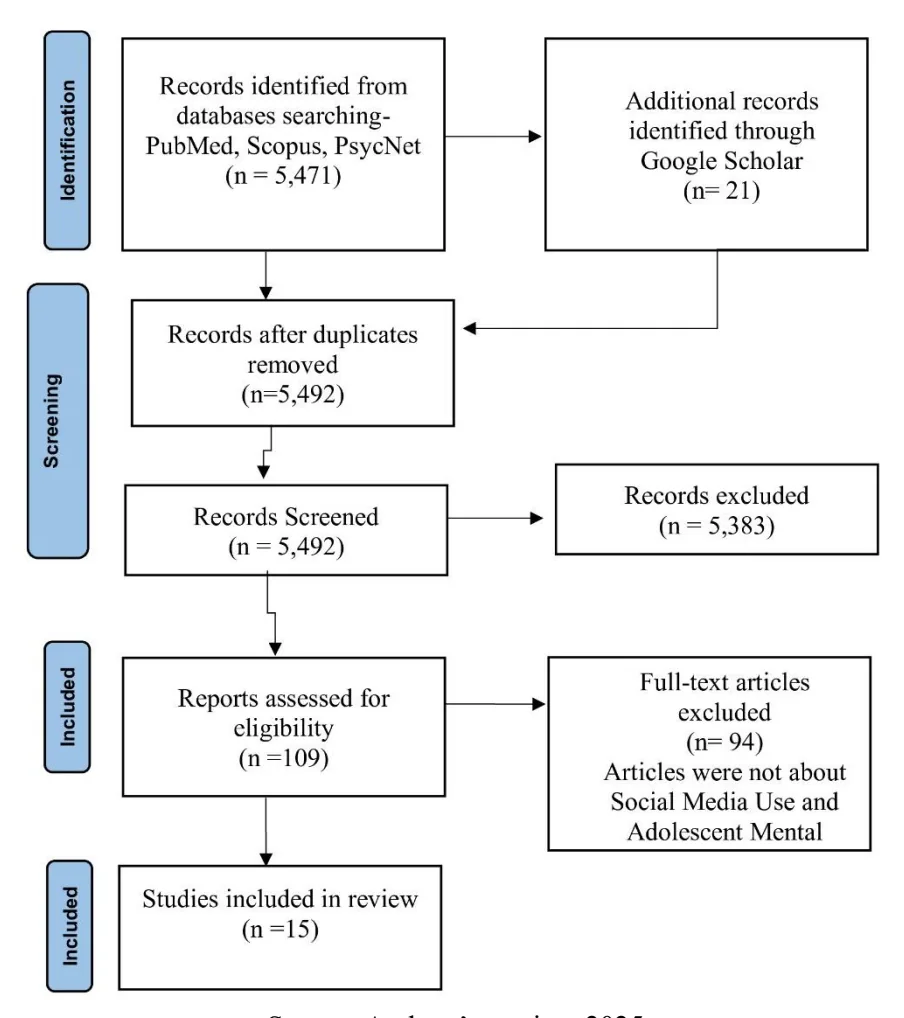
The initial search yielded 5,492 records, with 21 additional sources identified through other channels. After removing 5,383 records, 109 records remained for screening. Following title and abstract review, 94 records were excluded for irrelevance, leaving 15 full-text articles assessed for eligibility. Finally, 15 studies met all criteria and were included in the review.
Figure 1: The PRISMA Flow Diagram. Stages Involved in Finalizing Articles for Analysis After Obtaining the Data.
Source: Authors' creation, 2025
Data from the included studies were extracted systematically, capturing author(s), year, country, study design, sample size, social media platform(s), psychological outcomes, key findings, and limitations. The synthesis was narrative and thematic, focusing on:
- i. Patterns and purposes of adolescent social media use.
- ii. Negative mental health outcomes.
- iii. Positive psychological outcomes.
- iv. Moderating and contextual factors.
- v. Gaps and theoretical frameworks.
This methodology ensured a comprehensive, reproducible, and critically informed review of the literature.
4. FINDINGS
4.1 Patterns and Intensity of Social Media Use
Across the included studies, adolescent engagement with social media was reported as frequent, habitual, and often emotionally driven. Platforms such as Instagram, TikTok, Snapchat, and Facebook were found to be the most commonly used among adolescents (Dixon, 2024)
Several studies indicated that adolescents reported using social media primarily for social connection, entertainment, self-expression, identity exploration, and information seeking (George & Odgers, 2015; Craig et al., 2021). Frequency of daily access varied, but a consistent pattern showed multiple log-ins per day and persistent online presence (Beri, 2017). High levels of usage were also linked to behaviours such as social comparison, passive scrolling, and emotional dependency, particularly among female users (Fardouly et al., 2015; Vannucci & McCauley Ohannessian, 2019).
4.2 Negative Psychological Outcomes
Across the reviewed studies, several consistent associations emerged between intense or problematic social media use and adverse mental health outcomes.
Key findings include:
- i. Increased depression and anxiety symptoms were strongly linked to high-intensity social media use, especially when associated with rumination, passive browsing, or appearancebased platforms (Twenge et al., 2018).
- ii. Body image concerns and low self-esteem were commonly reported among adolescent girls frequently exposed to appearance-focused content (Tiggemann & Slater, 2013; Pedalino & Camerini, 2022).
- iii. Cyberbullying experiences, both as victims and perpetrators, were strongly associated with emotional distress, lowered self-esteem, and increased risk of suicidal ideation (Hinduja & Patchin, 2013).
- iv. Sleep disturbances, including delayed sleep onset and poor sleep quality, were linked to nighttime screen use, social pressure to remain online, and blue-light exposure (Sampasa-Kanyinga et al., 2018).
- v. A subset of adolescents reportedly developed problematic or addictive usage patterns, characterized by compulsive checking, inability to disengage, and emotional discomfort when offline (Shannon et al., 2022).
Overall, these studies suggest a clear association between problematic patterns of social media use and mental health challenges among adolescents, particularly in vulnerable or at-risk groups.
4.3 Positive Psychological Outcomes
Despite documented risks, several studies also highlighted meaningful psychological benefits when social media is used purposefully and constructively.
Key findings include:
- i. Enhanced social support and social belonging, especially among adolescents facing isolation, marginalization, or minority identity challenges (George & Odgers, 2015; Craig et al., 2021; Villatte et al., 2022).
- ii. Opportunities for self-expression, identity exploration, and creative engagement, which contributed to increased autonomy and confidence (Rideout et al., 2018; Montag et al., 2021).
- iii. Access to mental health resources, coping advice, peer support communities, and digital well-being interventions (Richards et al., 2015; Potts et al., 2025).
iv. Positive reinforcement through peer validation and community engagement, particularly when online interactions were supportive rather than comparative (Sherman et al., 2018).
These findings emphasize that social media is not inherently harmful; rather, outcomes depend on patterns of use and user context.
4.4 Moderating and Contextual Factors
The relationship between social media use and mental health was found to be non-linear and moderated by multiple variables, including age, gender, purpose of use (active engagement vs. passive browsing), individual psychological vulnerabilities (e.g., low self-esteem, pre-existing anxiety), social environment (parental involvement and peer dynamics), and platform type/exposure to algorithmically amplified content (Vannucci & McCauley Ohannessian, 2019; Kelly et al., 2018).
Studies applying frameworks such as the Differential Susceptibility to Media Effects Model (DSMM) suggested that individual traits, social context, and emotional states collectively shape whether social media produces risk, resilience, or neutrality.
Overall, the evidence indicates that social media use among adolescents is multifaceted, producing both risks and benefits depending on behavioural patterns, psychological context, and platform dynamics. While high-intensity, passive, or socially comparative use is often associated with negative outcomes, constructive, moderated, and socially supportive engagement can foster well-being, community connection, and personal growth.
5. DISCUSSION
The findings of this review indicate that the relationship between social media use and adolescent mental health is complex and multidimensional rather than universally harmful or beneficial. While social media has become an integral component of adolescent life, its psychological impact appears to depend on several behavioural and contextual patterns, including intensity of use, user motivations, and the nature of online interactions. High-frequency engagement, particularly characterized by passive browsing, upward social comparison, and emotionally driven usage, was consistently associated with increased levels of depression, anxiety symptoms, sleep disruption, and negative body image.
Conversely, several studies highlighted positive psychological benefits, particularly when social media was used actively and intentionally (George & Odgers, 2015; Pretorius et al., 2019). Platforms offered opportunities for identity development, creative self-expression, and meaningful peer support. Notably, adolescents who felt isolated or belonged to marginalized groups including LGBTQ+ youth reported increased feelings of belonging, emotional safety, and validation in online communities (Craig et al., 2021). The availability of digital mental health resources, peer-support forums, and targeted interventions demonstrated potential therapeutic value when integrated constructively into adolescents' support systems (Potts et al., 2025).
A key insight emerging from this review is the presence of moderating factors influencing the direction of social media's impact. Individual traits such as prior mental health status, level of selfesteem, and emotional regulation capacity affected whether use was supportive or harmful (Vannucci & McCauley Ohannessian, 2019). Social context, including parental monitoring, peer environments, and cultural attitudes toward digital engagement, further shaped outcomes (Kelly et al., 2018). The Differential Susceptibility to Media Effects Model (DSMM) supports the interpretation that adolescent's psychological characteristics and motivations interact with media features to determine whether exposure results in vulnerability or resilience (Valkenburg & Peter, 2013).
Taken together, the evidence suggests that strengthening digital literacy, supporting healthy online habits, and fostering reflective rather than comparative engagement may help adolescents navigate social media environments more safely. With balanced use and supportive structures, social media holds the potential to function not only as a risk factor but also as a valuable resource for connection, identity formation, and psychological support (Rideout et al., 2018).
6. CONCLUSION
This narrative review demonstrates that the relationship between social media use and adolescent mental health is multifaceted and dynamic, shaped by an interplay of behavioural patterns, psychological vulnerability, and social context. Rather than exerting uniform effects, social media engagement produces both risks and benefits depending on how adolescents use digital platforms, the motivations underlying engagement, and the environments in which use occurs. Excessive, emotionally driven, and comparison-oriented use is consistently linked to poorer mental health outcomes, whereas purposeful and socially supportive engagement can facilitate connection, identity exploration, and access to emotional resources.
A central insight emerging from this review is that adolescents are not equally affected by social media exposure. Individual susceptibility, platform design features, online interaction styles, parental mediation, and broader cultural contexts critically shape whether digital engagement amplifies vulnerability or supports resilience. The application of explanatory frameworks such as Social Comparison Theory and the Differential Susceptibility to Media Effects Model offers valuable conceptual clarity by highlighting why similar levels of exposure may yield divergent psychological outcomes. However, these frameworks remain unevenly integrated across empirical studies, limiting their full explanatory potential.
Despite the expanding body of literature, substantial methodological limitations persist. The dominance of cross-sectional designs constrains causal inference, while the relative scarcity of longitudinal and culturally diverse research restricts understanding of developmental trajectories and contextual variation. Addressing these gaps will require greater use of longitudinal designs, crosscultural comparative research, and platform-specific analyses that reflect the rapidly evolving digital ecosystem.
Overall, this review argues against polarized narratives that portray social media as either inherently harmful or unequivocally beneficial. Instead, social media should be understood as a complex psychosocial environment capable of both supporting and undermining adolescent well-being. A developmentally sensitive, context-aware approach, grounded in theory and empirical evidence is essential for guiding future research, informing policy, and supporting adolescents in cultivating healthier and more reflective digital engagement.
Acknowledgements
Not Applicable
Declaration of Competing Interest
No conflicts of interest.
Declaration of Generative AI and AI-Assisted Technologies in the Writing Process Not Applicable
Funding
No funding.
REFERENCES
-
Anderson, M., Faverio, M., & Gottfried, J. (2023). Teens, Social Media and Technology 2023 . (Report). Pew Research Center. https://www.pewresearch.org/internet/2023/12/11/teens-social-mediaand-technology-2023/
-
Arad, A., Barzilay, O., & Perchick, M. (2017). The Impact of Facebook on Social Comparison and Happiness: Evidence from a Natural Experiment. SSRN Electronic Journal, 52. https://papers.ssrn.com/sol3/papers.cfm?abstract\_id=2916158
-
Beri, N. (2017). Impact of Social Networking Sites on Adolescence: A Review. International Journal of research cluture Society, 1(5). https://ijrcs.org/wp-content/uploads/IJRCS201707004.pdf
-
Boer, M., Stevens, G. W. J. M., Finkenauer, C., Looze, M. E. de., & Eijnden, R. J. J. M. van. (2021). Social media use intensity, social media use problems, and mental health among adolescents: Investigating directionality and mediating processes. Computers in Human Behavior, 116, 106645. https://doi.org/10.1016/j.chb.2020.106645
-
Bottino, S. M. B., Bottino, C. M. C., Regina, C. G., Correia, A. V. L., & Ribeiro, W. S. (2015). Cyberbullying and adolescent mental health: systematic review. Cadernos de Saude Publica, 31(3), 463–475. https://doi.org/10.1590/0102-311X00036114
-
Bradley, K. L., Robinson, L. M., & Brannen, C. L. (2012). Adolescent help-seeking for psychological distress, depression, and anxiety using an Internet program. International Journal of Mental Health Promotion, 14(1), 23–34. https://doi.org/10.1080/14623730.2012.665337
-
Coyne, S. M., Rogers, A. A., Zurcher, J. D., Stockdale, L., & Booth, M. (2019). Does time spent using social media impact mental health?: An eight year longitudinal study. Faculty Publications, 104. https://scholarsarchive.byu.edu/cgi/viewcontent.cgi?params=/context/facpub/article/5103/&pat h_info=Does_time_spent_using_social_media_impact_mental_health.pdf
-
Craig, S. L., Eaton, A. D., McInroy, L. B., Leung, V. W. Y., & Krishnan, S. (2021). Can Social Media Participation Enhance LGBTQ+ Youth Well-Being? Development of the Social Media Benefits Scale. Social Media and Society, 7(1).https://doi.org/10.1177/2056305121988931
-
Dixon, S. Jo. (2024). Most used social media platforms among internet users in Great Britain (GB) in June 2024, by age group. Statista. https://www.statista.com/statistics/1480562/social-mediaplatforms-used-by-agegroup/?srsltid=AfmBOopAIXY4JkV46uH8rCporDwOu2\_cG3DYip46zqHhiyqNyXePesuv
-
Draženović, M., Vukušić Rukavina, T., & Machala Poplašen, L. (2023). Impact of Social Media Use on Mental Health within Adolescent and Student Populations during COVID-19 Pandemic: Review. International Journal of Environmental Research and Public Health, 20(4), 3392. https://pmc.ncbi.nlm.nih.gov/articles/PMC9965407/
-
Fardouly, J., Diedrichs, P. C., Vartanian, L. R., & Halliwell, E. (2015). Social comparisons on social media: THE impact of Facebook on young women's body image concerns and mood. Body Image, 13, 38–45. https://doi.org/10.1016/j.bodyim.2014.12.002
-
Festinger, L. (1954). A Theory of Social Comparison Processes. Human Relations, 7(2), 117–140. https://journals.sagepub.com/doi/10.1177/001872675400700202
-
Gámez-Guadix, M., Borrajo, E., & Almendros, C. (2016). Risky online behaviors among adolescents: Longitudinal relations among problematic Internet use, cyberbullying perpetration, and meeting strangers online. Journal of Behavioral Addictions, 5(1), 100–107. https://akjournals.com/view/journals/2006/5/1/article-p100.xml
-
George, M. J., & Odgers, C. L. (2015). Seven fears and the science of how mobile technologies may be influencing adolescents in the digital age. Perspectives on Psychological Science : A Journal of
-
the Association for Psychological Science, 10(6), 832. https://pmc.ncbi.nlm.nih.gov/articles/PMC4654691/
-
Hinduja, S., & Patchin, J. W. (2013). Social Influences on Cyberbullying Behaviors Among Middle and High School Students. Journal of Youth and Adolescence, 42(5), 711–722. https://pubmed.ncbi.nlm.nih.gov/23296318/
-
Kauer, S. D., Mangan, C., & Sanci, L. (2014). Do online mental health services improve help-seeking for young people? a systematic review. Journal of Medical Internet Research, 16(3), e3103. https://pmc.ncbi.nlm.nih.gov/articles/PMC3961801/
-
Keles, B., McCrae, N., & Grealish, A. (2020). A systematic review: the influence of social media on depression, anxiety and psychological distress in adolescents. International Journal of Adolescence and Youth, 25(1), 79–93. https://pmc.ncbi.nlm.nih.gov/articles/PMC3961801/
-
Kelly, Y., Zilanawala, A., Booker, C., & Sacker, A. (2018). Social Media Use and Adolescent Mental Health: Findings From the UK Millennium Cohort Study. EClinicalMedicine, 6, 59–68. https://www.thelancet.com/journals/eclinm/article/PIIS2589-5370(18)30060-9/fulltext
-
Livingstone, S., Nandi, A., Banaji, S., & Stoilova, M. (2017). Young adolescents and digital media: uses, risks and opportunities in low-and middle-income countries: a rapid evidence review. Gage. https://gage.odi.org/young-adolescents-and-digital-media-uses-risks-and-opportunities-in-lowand-middle-income-countries-1/
-
Marciano, L., Ostroumova, M., Schulz, P. J., & Camerini, A. L. (2022). Digital Media Use and Adolescents' Mental Health During the Covid-19 Pandemic: A Systematic Review and Meta-Analysis. Frontiers in Public Health, 9, 793868. https://www.frontiersin.org/journals/publichealth/articles/10.3389/fpubh.2021.793868/full
-
Montag, C., Yang, H., & Elhai, J. D. (2021). On the Psychology of TikTok Use: A First Glimpse From Empirical Findings. Frontiers in Public Health, 9, 641673. https://www.frontiersin.org/journals/public-health/articles/10.3389/fpubh.2021.641673/full
-
Naslund, J. A., Bondre, A., Torous, J., & Aschbrenner, K. A. (2020). Social Media and Mental Health: Benefits, Risks, and Opportunities for Research and Practice. Journal of Technology in Behavioral Science, 5(3), 245. https://link.springer.com/article/10.1007/s41347-020-00134-x
-
Nesi, J., Telzer, E. H., & Prinstein, M. J. (2020). Adolescent Development in the Digital Media Context. Psychological Inquiry, 31(3), 229.https://doi.org/10.1080/1047840X.2020.1820219
-
Odgers, C. L., & Jensen, M. R. (2020). Annual Research Review: Adolescent mental health in the digital age: facts, fears, and future directions. Journal of Child Psychology and Psychiatry and Allied Disciplines, 61(3), 336–348. https://doi.org/10.1111/jcpp.13190
-
Orben, A., & Przybylski, A. K. (2019). The association between adolescent well-being and digital technology use. Nature Human Behaviour, 3(2), 173–182. https://www.nature.com/articles/s41562-018-0506-1
-
Pater, J., Kim, M. K., Mynatt, E., & Fiesler, C. (2016). Characterizations of online harassment: Comparing policies across social media platforms. Health Services and Informatics Research. 149. https://researchrepository.parkviewhealth.org/informatics/149/
-
Pedalino, F., & Camerini, A. L. (2022). Instagram Use and Body Dissatisfaction: The Mediating Role of Upward Social Comparison with Peers and Influencers among Young Females. International Journal of Environmental Research and Public Health, 19(3), 1543. https://pmc.ncbi.nlm.nih.gov/articles/PMC8834897/
-
Potts, C., Kealy, C., McNulty, J. M., Madrid-Cagigal, A., Wilson, T., Mulvenna, M. D., O'Neill, S., Donohoe, G., & Barry, M. M. (2025). Digital Mental Health Interventions for Young People
-
Aged 16-25 Years: Scoping Review. J Med Internet Res 2025;27:E72892*.* https://www.jmir.org/2025/1/e72892
-
Pretorius, C., Chambers, D., & Coyle, D. (2019). Young people's online help-seeking and mental health difficulties: Systematic narrative review. Journal of Medical Internet Research, 21(11). https://pubmed.ncbi.nlm.nih.gov/31742562/
-
Przybylski, A. K., Murayama, K., Dehaan, C. R., & Gladwell, V. (2013). Motivational, emotional, and behavioral correlates of fear of missing out. Computers in Human Behavior. https://www.sciencedirect.com/science/article/abs/pii/S0747563213000800
-
Richards, D., Caldwell, P. H. Y., & Go, H. (2015). Impact of social media on the health of children and young people. Journal of Paediatrics and Child Health, 51(12), 1152–1157. https://pubmed.ncbi.nlm.nih.gov/26607861/
-
Rideout, V., Fox, S., & Trust, W. B. (2018). Digital Health Practices, Social Media Use, and Mental Well-Being Among Teens and Young Adults in the U.S. Articles, Abstracts, and Reports. https://digitalcommons.providence.org/cgi/viewcontent.cgi?article=2092&context=publications
-
Sampasa-Kanyinga, H., Hamilton, H. A., & Chaput, J. P. (2018). Use of social media is associated with short sleep duration in a dose–response manner in students aged 11 to 20 years. Acta Paediatrica, International Journal of Paediatrics, 107(4), 694–700. https://pubmed.ncbi.nlm.nih.gov/29363166/
-
Schønning, V., Hjetland, G. J., Aarø, L. E., & Skogen, J. C. (2020). Social Media Use and Mental Health and Well-Being Among Adolescents – A Scoping Review. Frontiers in Psychology, 11, 1949. https://www.frontiersin.org/journals/psychology/articles/10.3389/fpsyg.2020.01949/full
-
Scott, H., Biello, S. M., & Woods, H. C. (2019). Social media use and adolescent sleep patterns: crosssectional findings from the UK millennium cohort study. BMJ Open, 9(9), e031161. https://bmjopen.bmj.com/content/9/9/e031161
-
Shannon, H., Bush, K., Villeneuve, P. J., Hellemans, K. G. C., & Guimond, S. (2022). Problematic Social Media Use in Adolescents and Young Adults: Systematic Review and Meta-analysis. JMIR Mental Health, 9(4). https://mental.jmir.org/2022/4/e33450
-
Sherman, L. E., Greenfield, P. M., Hernandez, L. M., & Dapretto, M. (2018). Peer Influence Via Instagram: Effects on Brain and Behavior in Adolescence and Young Adulthood. Child Development, 89(1), 37–47. https://pmc.ncbi.nlm.nih.gov/articles/PMC5730501/
-
Silvani, M. I., Werder, R., & Perret, C. (2022). The influence of blue light on sleep, performance and wellbeing in young adults: A systematic review. Frontiers in Physiology, 13, 943108. https://pubmed.ncbi.nlm.nih.gov/36051910/
-
Smahel, D., Machackova, H., Mascheroni, G., Dedkova, L., Staksrud, E., Ólafsson, K., Livingstone, S., & Hasebrink, U. (2020). EU Kids Online 2020 Survey results from 19 countries. EU Kids Online. https://www.eukidsonline.ch/files/Eu-kids-online-2020-international-report.pdf
-
Tiggemann, M., & Slater, A. (2013). NetGirls: The internet, facebook, and body image concern in adolescent girls. International Journal of Eating Disorders, 46(6), 630–633. https://pubmed.ncbi.nlm.nih.gov/23712456/
-
Twenge, J. M., Martin, G. N., & Campbell, W. K. (2018). Decreases in psychological well-being among American adolescents after 2012 and links to screen time during the rise of smartphone technology. Emotion, 18(6), 765–780. https://pubmed.ncbi.nlm.nih.gov/29355336/
-
Valkenburg, P. M., Meier, A., & Beyens, I. (2022). Social media use and its impact on adolescent mental health: An umbrella review of the evidence. Current Opinion in Psychology, 44, 58–68. https://www.sciencedirect.com/science/article/pii/S2352250X21001500
-
Valkenburg, P. M., & Peter, J. (2013). The differential susceptibility to media effects model. Journal of Communication, 63(2), 221–243. https://doi.org/10.1111/jcom.12024
-
Vannucci, A., & McCauley Ohannessian, C. (2019). Social Media Use Subgroups Differentially Predict Psychosocial Well-Being During Early Adolescence. Journal of Youth and Adolescence, 48(8), 1469–1493. https://doi.org/10.1007/s10964-019-01060-9
-
Villatte, A., Piché, G., & Benjamin, S. (2022). Perceived Support and Sense of Social Belonging in Young Adults Who Have a Parent With a Mental Illness. Frontiers in Psychiatry, 12, 793344. https://doi.org/10.3389/fpsyt.2021.793344
-
Woods, H. C., & Scott, H. (2016). #Sleepyteens: Social media use in adolescence is associated with poor sleep quality, anxiety, depression and low self-esteem. Journal of Adolescence, 51, 41–49. https://doi.org/10.1016/j.adolescence.2016.05.008